The Definitive Guide to
Astoria Loft Space.
A field guide to the cheapest working creative floors in this network — what the Steinway industrial blocks actually give you, why the film business never left 36th Street, and how to read a converted factory floor before you sign.
What actually counts as a loft here
Astoria's creative stock came out of two things that both still exist: manufacturing and film. William Steinway built a piano factory and an entire village around it in the 1870s, and the company is still making pianos on that site. Paramount built its East Coast studio on 36th Street in 1920, and after thirty years as an Army film unit it came back as Kaufman Astoria Studios. Almost everything we lease here sits in the orbit of one or the other.
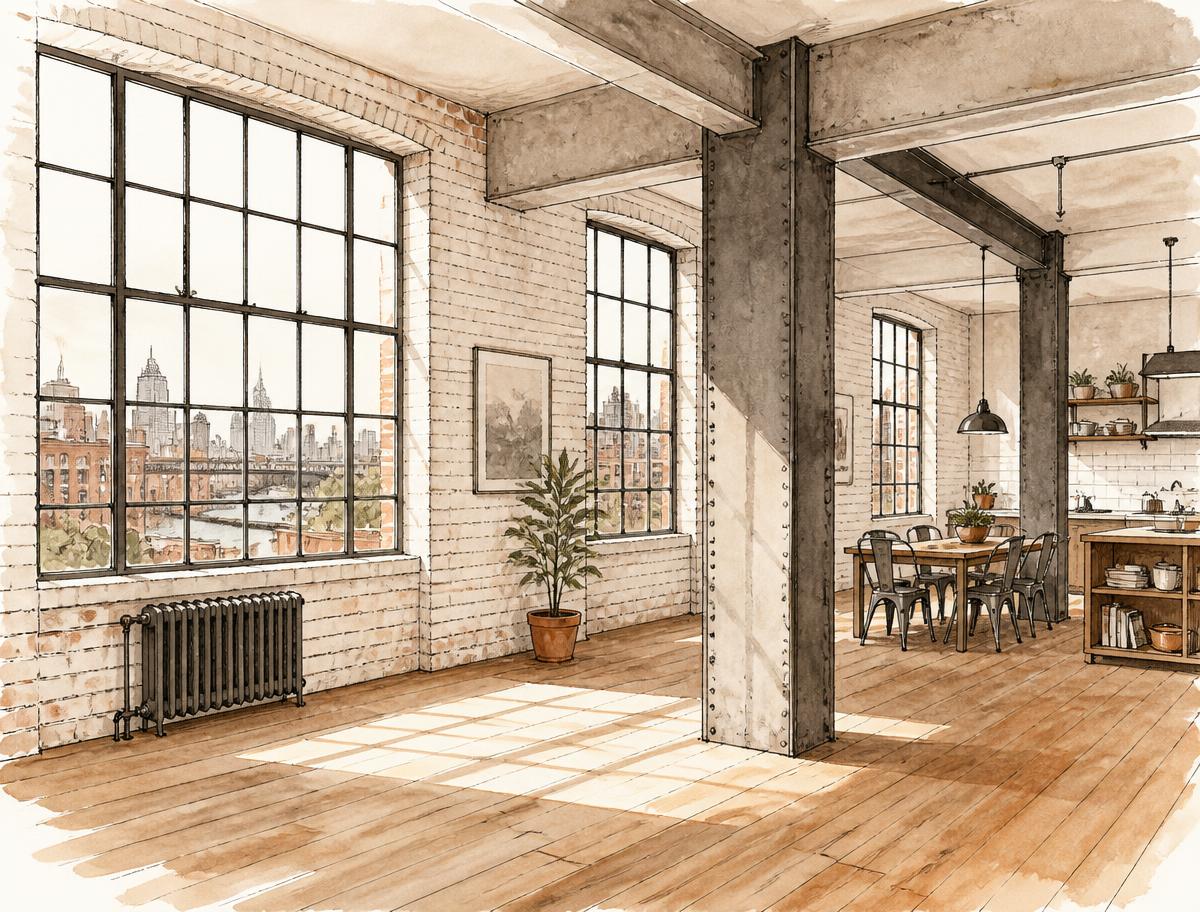
A real Astoria floor has some combination of the following: brick and steel-sash or factory windows, ceilings 11 to 14 feet, a freight elevator or a drive-in door, three-phase power in the industrial blocks, and very little build-out. What it usually doesn't have is a lobby, central air, or a short walk to the train. That's the trade, and it's why this is the least expensive neighborhood in this network that already has a working creative economy in it.
Three kinds of building, three different deals
The converted manufacturing loft. Concentrated on 35th and 36th Avenues and in the blocks east toward Steinway — brick, factory glazing, timber or steel framing, freight, floors rated for machinery. Plates commonly run 3,000 to 12,000 SF. This is the classic Astoria creative floor and where most of the studio and design tenancy lives.
The industrial building east of Steinway. Concrete and steel, wide bays, drive-in doors and docks, high floor loads, sometimes single-storey. Inside a designated industrial business zone, so manufacturing is protected policy rather than a tolerated exception. If you're fabricating, cooking at volume, building sets or moving pallets, this is your building type and your part of the neighborhood.
The small commercial building above retail. Along Broadway, 30th Avenue, Ditmars and Steinway Street — two to six storeys over a storefront, one or two suites per floor, often a single elevator or none at all. This is where the 500 to 2,000 SF suites are, it's the most walkable stock in the neighborhood, and it's frequently leased directly by an owner who has held the building for forty years.
What to check on an Astoria tour
Power. The question that decides most deals here. Ask whether three-phase service is available and at what amperage, what the panel has spare, and who pays to bring in more. The industrial blocks are generally well served; the small buildings over retail frequently are not, and upgrading service in an older Astoria building is neither quick nor cheap.
Loading, and the turn. Ask whether it's a dock, a drive-in door or a shared curb cut, and get the clear height. Then check whether a truck can physically make the turn onto that block — several of the older Astoria streets are tighter than the map suggests, and the elevated structure on 31st constrains more than people expect.
Which side of the industrial line you're on. Inside the industrial business zone east of Steinway, machinery, overnight hours and truck traffic are normal and your neighbors are doing the same thing. Closer to the residential streets off 30th Avenue and Ditmars, all three become negotiations. Establish which you're in before the LOI rather than after the first complaint.
Heat, and what's missing. Much of this stock still runs original steam, and cooling is usually the tenant's problem entirely. Confirm what exists, what's base-building, and what you're expected to install — in Astoria that line item is routinely the largest single number in a build-out budget.
Floor load. Ask for the live-load rating in PSF and get it in writing. The industrial slabs commonly carry far more than you'll need; the older timber-framed floors near the studio campus are often lower than tenants assume. If you're placing equipment, a kiln, a press or dense storage, this number decides the building.
The walk to the train, measured honestly. The N and W along 31st Street cover the residential spine well, and the M and R serve Steinway. But parts of the industrial area are ten to fifteen minutes from either. Walk it yourself at commuting hour before you decide it's fine — this is the most common thing tenants get wrong about Astoria.
Where the loft floors actually are
Three distinct pockets, and which one you want depends mostly on whether your business needs a stage, a truck, or a train.
The film pocket — 35th and 36th Avenues around the Kaufman campus. Converted factory floors, production offices, post rooms, scenic and grip houses, and the Museum of the Moving Image. If your work touches film or television in any way, be here — the ecosystem is a century deep and it's the reason crews stay in Queens.
The Steinway industrial blocks — east toward Bowery Bay. Docks, drive-in doors, three-phase power, real floor loads, and the Steinway factory itself still running. Cheapest space per foot in the neighborhood, protected industrial zoning, and the only stretch where heavy production is genuinely expected. Also the furthest from a subway.
The retail spines — Broadway, 30th Avenue, Ditmars and Steinway Street. Small floors over storefronts, the most walkable and best-served part of Astoria, and the best lunch in this entire network. Right for a small studio or an office-style team that wants to be on a real high street rather than in an industrial block.
What tenants ask us about most
“How much is a floor?” Roughly $28–$45 per SF per year, against a neighborhood office average reported around $35 — the low end for raw floors in the industrial blocks, the high end for renovated space near the studio campus or on the 30th Avenue and Broadway corridors. Ask for the electrical service, the heat source, and whether the rent is quoted on rentable or usable square footage before comparing.
“Can I make noise and work late?” In the industrial blocks east of Steinway, yes — that area is a designated industrial business zone and your neighbors are running production too. Closer to the residential streets off 30th Avenue and Ditmars it's much stricter. Confirm which side of that line your building sits on before the LOI.
“How is this different from Long Island City?” Cheaper, lower and more neighborhood. LIC has the towers, the newer conversions, the shorter commute and the higher rents. Astoria has smaller buildings, older stock, a real high street, and asking rents well below its neighbor's. If you want a glass floor with skyline views, go south.
“What's the catch?” Condition and distance. Much of this stock has original heat, undersized electrical, one slow freight and no lobby, and parts of the industrial area are a real walk from the N or the M. You're also further from Manhattan clients than Brooklyn's loft districts. In exchange you get the lowest rents and the deepest production ecosystem in this network.
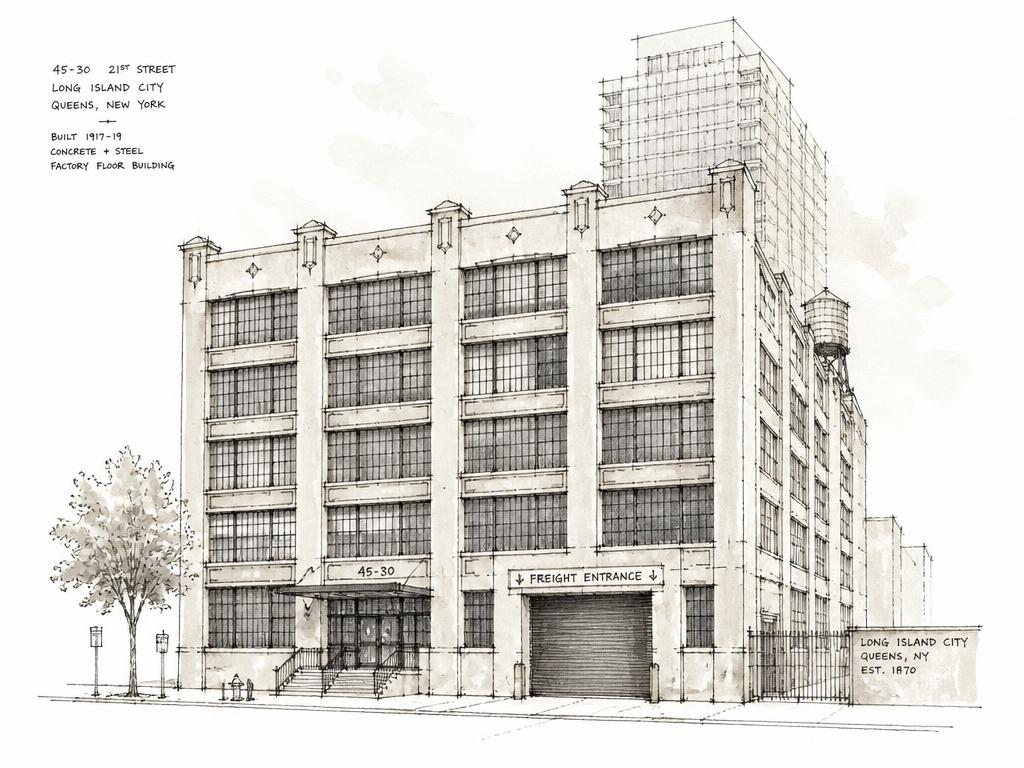
South along the river in Queens: taller concrete-and-steel factory floors and newer towers, with wide bays, real freight and more subway lines than anywhere nearby. Bigger plates and higher rents than Astoria's lower brick stock.
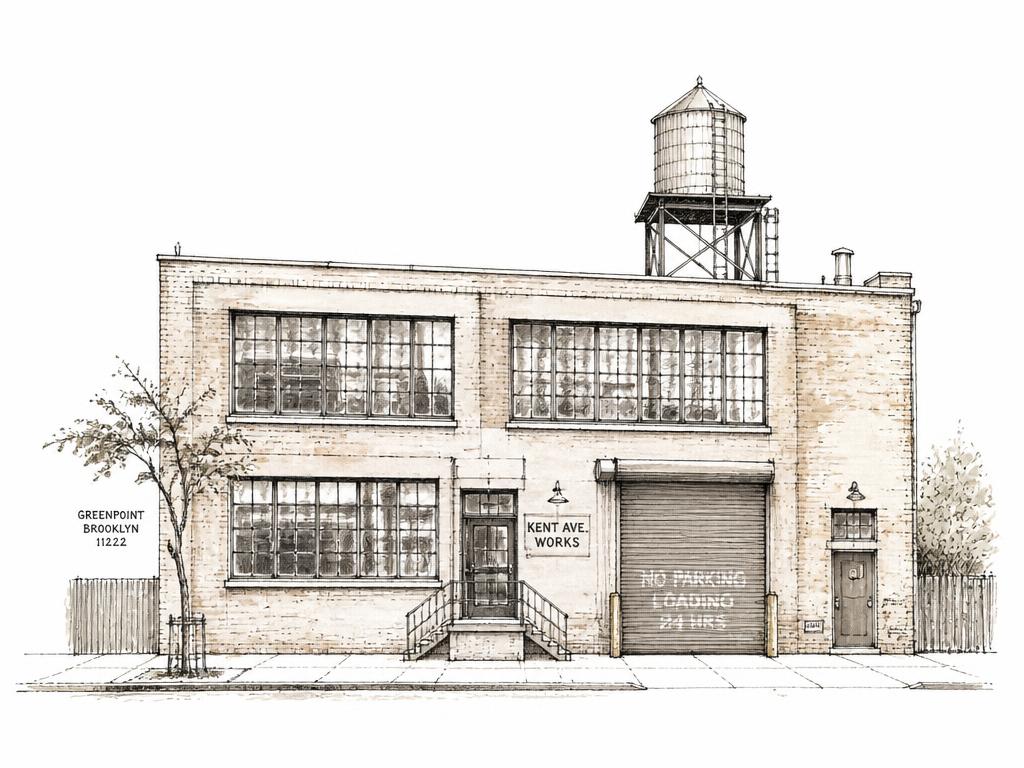
Across Newtown Creek in Brooklyn: low brick and timber workshops, small manufacturing yards and converted warehouse floors. Closest in feel to Astoria's smaller plates, on tighter streets.
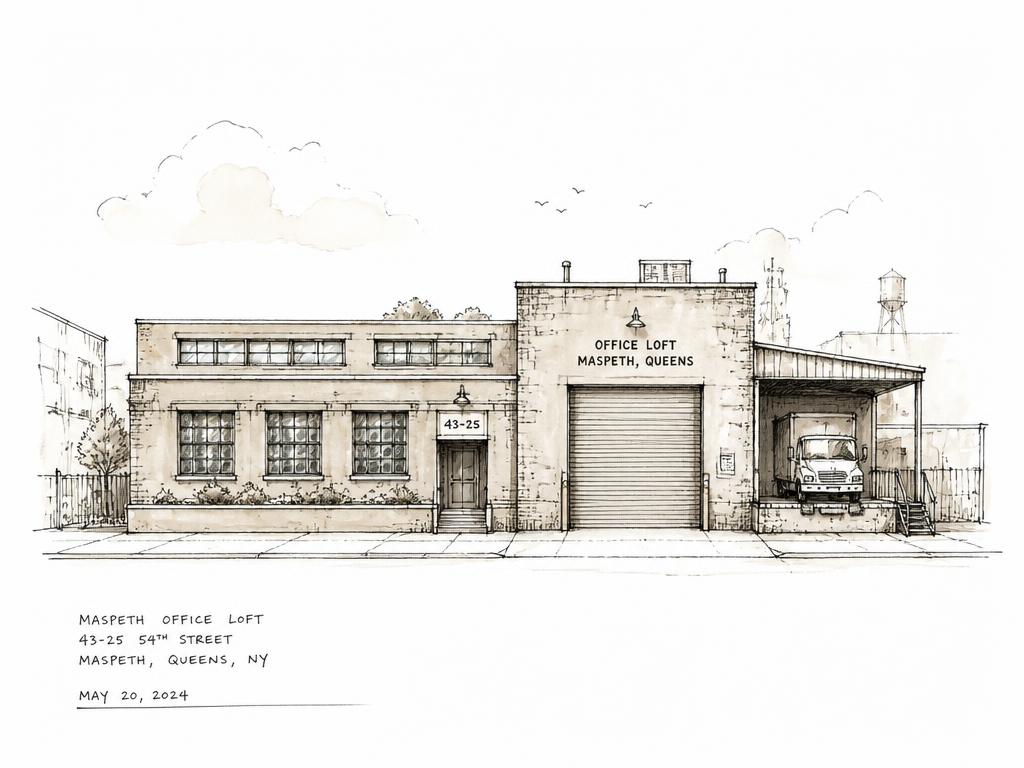
Inland Queens, east of the expressway: mid-century one- and two-story industrial buildings, drive-in doors and truck access rather than loft floors. Cheapest space nearby, and the furthest from a train.
Tell us what you're after.
Seven quick questions. A person reads it. We keep an eye out — including for floors that never hit a listing site.
Start the Brief →